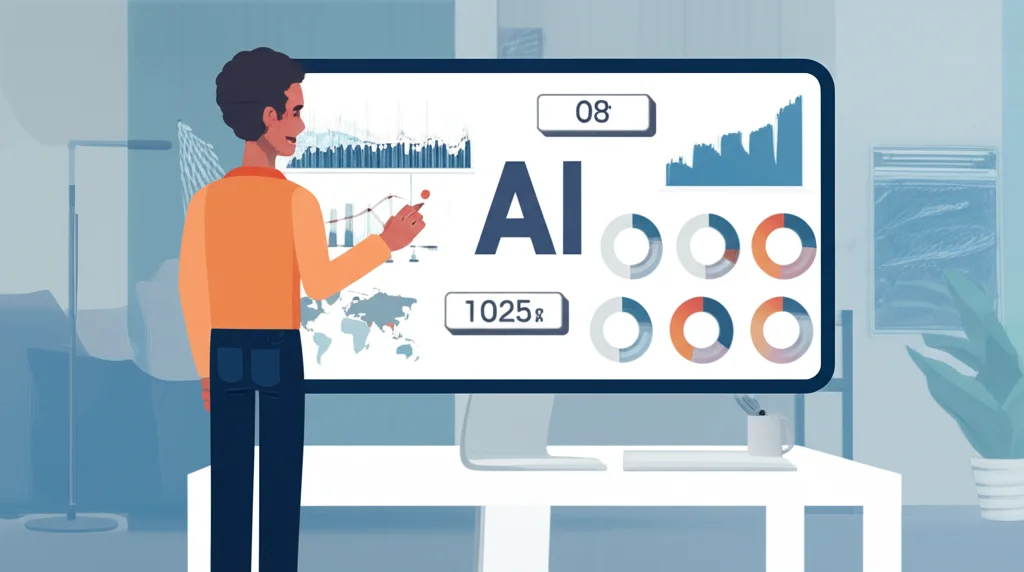
AI-Powered Marketing in 2025: How Small Businesses Can Compete with Big Brands

AI-Powered Marketing in 2025: How Small Businesses Can Compete with Big Brands

August 18, 2025 by Tural

AI-Powered Marketing in 2025: How Small Businesses Can Compete with Big Brands

The future of marketing isn't just for giants. Discover how artificial intelligence can level the playing field for your small business.

Introduction: The AI Marketing Revolution is Here

It's 2025, and artificial intelligence is no longer a futuristic concept but a powerful, accessible tool transforming industries. For small businesses, the notion of competing with the marketing budgets and sophisticated strategies of large corporations can feel daunting. However, AI is rapidly changing this narrative, offering an unprecedented opportunity to democratize advanced marketing capabilities. Far from being an exclusive playground for big brands, AI-powered marketing is becoming the ultimate equalizer, enabling agile small businesses to punch above their weight.

This post will explore how small businesses can harness AI in 2025 to optimize their marketing efforts, personalize customer experiences, and achieve remarkable growth, proving that innovation, not just deep pockets, wins the marketing game.

Why AI is a Game-Changer for Small Businesses

Historically, robust marketing departments, extensive market research, and multi-million dollar ad campaigns were prerogatives of large enterprises. AI fundamentally shifts this paradigm:

  • Democratization of Tools: Sophisticated algorithms and data analysis capabilities, once requiring massive investments, are now available through affordable Software-as-a-Service (SaaS) platforms.
  • Automation & Efficiency: AI automates repetitive, time-consuming tasks (e.g., data entry, report generation, basic customer queries), freeing up small teams to focus on strategy and creativity.
  • Data-Driven Insights: Even with limited data, AI can uncover patterns and predict trends, providing small businesses with actionable insights without the need for dedicated data scientists.
  • Cost-Effectiveness: By optimizing ad spend, improving conversion rates, and streamlining operations, AI directly contributes to a higher Return on Investment (ROI).

Key AI-Powered Marketing Areas for Small Businesses in 2025

Let's delve into specific ways AI can empower your small business marketing in the coming years:

1. Personalized Customer Experiences

AI allows small businesses to offer a level of personalization previously reserved for tech giants. By analyzing customer data (browsing history, purchase patterns, demographics), AI can tailor interactions to individual preferences.

  • Product Recommendations: E-commerce platforms can use AI to suggest products customers are most likely to buy, increasing average order value.
  • Dynamic Content: Websites and email campaigns can display content, offers, or even layouts that dynamically adjust based on the user's profile.
  • Chatbots for Instant Support: AI-powered chatbots provide 24/7 immediate answers to common queries, improving customer satisfaction and reducing support load.

Example: Imagine your small online boutique recommending outfits based on a customer's past purchases and browsing history, just like a major retailer.

2. Hyper-Targeted Advertising

Gone are the days of spray-and-pray advertising. AI empowers small businesses to pinpoint their ideal customer segments with unparalleled precision, ensuring every advertising dollar is spent effectively.

  • Audience Segmentation: AI analyzes vast datasets to identify granular audience segments based on behavior, interests, and demographics.
  • Ad Optimization: AI automatically adjusts bids, placements, and creatives in real-time to maximize performance and minimize Cost Per Acquisition (CPA).
  • Predictive Bidding: AI can predict which keywords or ad placements are most likely to convert, optimizing your ad spend on platforms like Google Ads or Facebook Ads.

Example: Instead of broadly targeting 'women aged 25-45 interested in fashion', AI can pinpoint 'women aged 28-35 who recently searched for sustainable fashion and live within 5 miles of your store' for a local boutique.

3. Automated Content Creation & Optimization

Content is king, but creating it consistently is a challenge for small teams. AI can significantly streamline this process.

  • Content Generation: AI writing assistants can draft blog posts, social media captions, email subject lines, and product descriptions, saving hours of manual work.
  • SEO Optimization: AI tools analyze competitor content and search trends to suggest keywords, topics, and structural improvements for better search engine rankings.
  • Performance Analysis: AI can evaluate content performance, identifying what resonates with your audience and suggesting improvements for future content.

Example: Generate several variations of an email subject line in seconds, then use AI to predict which one will have the highest open rate.

4. Predictive Analytics & Insights

One of AI's most powerful capabilities is its ability to forecast and provide deep insights, helping small businesses make proactive, data-driven decisions.

  • Sales Forecasting: Predict future sales trends based on historical data, seasonality, and external factors.
  • Customer Churn Prediction: Identify customers at risk of leaving, allowing you to implement retention strategies proactively.
  • Inventory Optimization: Predict demand for specific products, preventing stockouts or overstocking.

Example: Predict which products will be popular next season or which customers are likely to stop their subscription, allowing proactive intervention to boost sales or retain customers.

5. Enhanced Customer Service

Excellent customer service is a hallmark of successful small businesses. AI can enhance this further without requiring a large dedicated team.

  • 24/7 Support: AI chatbots handle routine inquiries, providing instant answers and escalating complex issues to human agents during business hours.
  • Sentiment Analysis: AI can analyze customer feedback (emails, reviews, social media) to gauge sentiment and identify areas for improvement.
  • Personalized Follow-ups: AI can trigger personalized follow-up emails or messages based on customer interactions.

Example: A customer asks a common question at 3 AM; an AI chatbot provides an instant, accurate answer, improving satisfaction and freeing up your team during the day.

Practical Steps for Small Businesses to Embrace AI Marketing

Ready to start? Here’s how small businesses can integrate AI into their marketing strategy:

  1. Start Small & Identify Pain Points: Don't try to implement AI everywhere at once. Choose one specific marketing challenge (e.g., email personalization, social media scheduling, ad targeting) where AI can make an immediate impact.
  2. Leverage Accessible SaaS Tools: Explore readily available, user-friendly AI-powered platforms. Examples include Mailchimp (AI-driven subject lines, send time optimization), HubSpot (CRM with AI insights), Jasper/Copy.ai (content generation), Google Ads/Meta Ads (AI-driven optimization), and various chatbot providers.
  3. Focus on Data Quality: AI thrives on data. Ensure your customer data is clean, organized, and compliant with privacy regulations. Garbage in, garbage out!
  4. Train Your Team: Even if AI handles much of the work, your team needs to understand how to use these tools, interpret the data, and refine AI outputs. Invest in basic AI literacy training.
  5. Monitor, Test, and Adapt: AI is not a set-it-and-forget-it solution. Continuously monitor performance, run A/B tests, and be prepared to refine your strategies based on AI-generated insights.

Overcoming Challenges

While promising, AI integration isn't without its hurdles:

  • Initial Learning Curve: Familiarizing your team with new tools takes time.
  • Data Privacy: Ensure your use of AI complies with data protection regulations (e.g., GDPR, CCPA). Transparency with customers is key.
  • Over-reliance: AI is a powerful assistant, but human oversight, creativity, and ethical judgment remain indispensable.

Conclusion: The Future is AI-Powered, and It's for Everyone

In 2025, AI is no longer a luxury but a strategic necessity for businesses of all sizes. For small businesses, it represents an unprecedented opportunity to compete on par with, or even surpass, larger competitors by leveraging efficiency, precision, and personalization at scale. By embracing AI, small businesses can transcend the limitations of traditional marketing, unlock new growth avenues, and build stronger, more meaningful connections with their customers.

Don't let the size of your budget dictate the ambition of your marketing. Start exploring AI today, and position your small business at the forefront of the marketing revolution.

AI-Powered Marketing in 2025: How Small Businesses Can Compete with Big Brands

AI-Powered Marketing in 2025: How Small Businesses Can Compete with Big Brands

August 18, 2025 by Tural

AI-Powered Marketing in 2025: How Small Businesses Can Compete with Big Brands

The future of marketing isn't just for giants. Discover how artificial intelligence can level the playing field for your small business.

Introduction: The AI Marketing Revolution is Here

It's 2025, and artificial intelligence is no longer a futuristic concept but a powerful, accessible tool transforming industries. For small businesses, the notion of competing with the marketing budgets and sophisticated strategies of large corporations can feel daunting. However, AI is rapidly changing this narrative, offering an unprecedented opportunity to democratize advanced marketing capabilities. Far from being an exclusive playground for big brands, AI-powered marketing is becoming the ultimate equalizer, enabling agile small businesses to punch above their weight.

This post will explore how small businesses can harness AI in 2025 to optimize their marketing efforts, personalize customer experiences, and achieve remarkable growth, proving that innovation, not just deep pockets, wins the marketing game.

Why AI is a Game-Changer for Small Businesses

Historically, robust marketing departments, extensive market research, and multi-million dollar ad campaigns were prerogatives of large enterprises. AI fundamentally shifts this paradigm:

  • Democratization of Tools: Sophisticated algorithms and data analysis capabilities, once requiring massive investments, are now available through affordable Software-as-a-Service (SaaS) platforms.
  • Automation & Efficiency: AI automates repetitive, time-consuming tasks (e.g., data entry, report generation, basic customer queries), freeing up small teams to focus on strategy and creativity.
  • Data-Driven Insights: Even with limited data, AI can uncover patterns and predict trends, providing small businesses with actionable insights without the need for dedicated data scientists.
  • Cost-Effectiveness: By optimizing ad spend, improving conversion rates, and streamlining operations, AI directly contributes to a higher Return on Investment (ROI).

Key AI-Powered Marketing Areas for Small Businesses in 2025

Let's delve into specific ways AI can empower your small business marketing in the coming years:

1. Personalized Customer Experiences

AI allows small businesses to offer a level of personalization previously reserved for tech giants. By analyzing customer data (browsing history, purchase patterns, demographics), AI can tailor interactions to individual preferences.

  • Product Recommendations: E-commerce platforms can use AI to suggest products customers are most likely to buy, increasing average order value.
  • Dynamic Content: Websites and email campaigns can display content, offers, or even layouts that dynamically adjust based on the user's profile.
  • Chatbots for Instant Support: AI-powered chatbots provide 24/7 immediate answers to common queries, improving customer satisfaction and reducing support load.

Example: Imagine your small online boutique recommending outfits based on a customer's past purchases and browsing history, just like a major retailer.

2. Hyper-Targeted Advertising

Gone are the days of spray-and-pray advertising. AI empowers small businesses to pinpoint their ideal customer segments with unparalleled precision, ensuring every advertising dollar is spent effectively.

  • Audience Segmentation: AI analyzes vast datasets to identify granular audience segments based on behavior, interests, and demographics.
  • Ad Optimization: AI automatically adjusts bids, placements, and creatives in real-time to maximize performance and minimize Cost Per Acquisition (CPA).
  • Predictive Bidding: AI can predict which keywords or ad placements are most likely to convert, optimizing your ad spend on platforms like Google Ads or Facebook Ads.

Example: Instead of broadly targeting 'women aged 25-45 interested in fashion', AI can pinpoint 'women aged 28-35 who recently searched for sustainable fashion and live within 5 miles of your store' for a local boutique.

3. Automated Content Creation & Optimization

Content is king, but creating it consistently is a challenge for small teams. AI can significantly streamline this process.

  • Content Generation: AI writing assistants can draft blog posts, social media captions, email subject lines, and product descriptions, saving hours of manual work.
  • SEO Optimization: AI tools analyze competitor content and search trends to suggest keywords, topics, and structural improvements for better search engine rankings.
  • Performance Analysis: AI can evaluate content performance, identifying what resonates with your audience and suggesting improvements for future content.

Example: Generate several variations of an email subject line in seconds, then use AI to predict which one will have the highest open rate.

4. Predictive Analytics & Insights

One of AI's most powerful capabilities is its ability to forecast and provide deep insights, helping small businesses make proactive, data-driven decisions.

  • Sales Forecasting: Predict future sales trends based on historical data, seasonality, and external factors.
  • Customer Churn Prediction: Identify customers at risk of leaving, allowing you to implement retention strategies proactively.
  • Inventory Optimization: Predict demand for specific products, preventing stockouts or overstocking.

Example: Predict which products will be popular next season or which customers are likely to stop their subscription, allowing proactive intervention to boost sales or retain customers.

5. Enhanced Customer Service

Excellent customer service is a hallmark of successful small businesses. AI can enhance this further without requiring a large dedicated team.

  • 24/7 Support: AI chatbots handle routine inquiries, providing instant answers and escalating complex issues to human agents during business hours.
  • Sentiment Analysis: AI can analyze customer feedback (emails, reviews, social media) to gauge sentiment and identify areas for improvement.
  • Personalized Follow-ups: AI can trigger personalized follow-up emails or messages based on customer interactions.

Example: A customer asks a common question at 3 AM; an AI chatbot provides an instant, accurate answer, improving satisfaction and freeing up your team during the day.

Practical Steps for Small Businesses to Embrace AI Marketing

Ready to start? Here’s how small businesses can integrate AI into their marketing strategy:

  1. Start Small & Identify Pain Points: Don't try to implement AI everywhere at once. Choose one specific marketing challenge (e.g., email personalization, social media scheduling, ad targeting) where AI can make an immediate impact.
  2. Leverage Accessible SaaS Tools: Explore readily available, user-friendly AI-powered platforms. Examples include Mailchimp (AI-driven subject lines, send time optimization), HubSpot (CRM with AI insights), Jasper/Copy.ai (content generation), Google Ads/Meta Ads (AI-driven optimization), and various chatbot providers.
  3. Focus on Data Quality: AI thrives on data. Ensure your customer data is clean, organized, and compliant with privacy regulations. Garbage in, garbage out!
  4. Train Your Team: Even if AI handles much of the work, your team needs to understand how to use these tools, interpret the data, and refine AI outputs. Invest in basic AI literacy training.
  5. Monitor, Test, and Adapt: AI is not a set-it-and-forget-it solution. Continuously monitor performance, run A/B tests, and be prepared to refine your strategies based on AI-generated insights.

Overcoming Challenges

While promising, AI integration isn't without its hurdles:

  • Initial Learning Curve: Familiarizing your team with new tools takes time.
  • Data Privacy: Ensure your use of AI complies with data protection regulations (e.g., GDPR, CCPA). Transparency with customers is key.
  • Over-reliance: AI is a powerful assistant, but human oversight, creativity, and ethical judgment remain indispensable.

Conclusion: The Future is AI-Powered, and It's for Everyone

In 2025, AI is no longer a luxury but a strategic necessity for businesses of all sizes. For small businesses, it represents an unprecedented opportunity to compete on par with, or even surpass, larger competitors by leveraging efficiency, precision, and personalization at scale. By embracing AI, small businesses can transcend the limitations of traditional marketing, unlock new growth avenues, and build stronger, more meaningful connections with their customers.

Don't let the size of your budget dictate the ambition of your marketing. Start exploring AI today, and position your small business at the forefront of the marketing revolution.